Thinking about moving to Poole? Life here can mean harbour walks, a neighbourhood café, weekends at the beach or a quieter routine in the suburbs. This guide introduces the practical side of living in Poole, including housing costs, household expenses, different areas, schools and transport. We look at the advantages and compromises, with advice on what to investigate before choosing a home and making the move.
16th October 2026
Poole’s appeal is easy to understand when you are walking beside the harbour or looking across the beach at Sandbanks. Living here, however, involves much more than the waterfront.
Your everyday experience will depend on where you settle. A flat near the town centre, a home around Ashley Cross and a residential street in Broadstone can offer very different routines.
Some addresses put shops, public transport and places to eat within walking distance. Others offer more separation from busy commercial areas but require extra planning for work, shopping and evenings out.
The most useful question is whether the particular part of Poole you are considering works for your ordinary week. Think about a wet Tuesday morning as well as a sunny Sunday afternoon.
Images: Unsplash
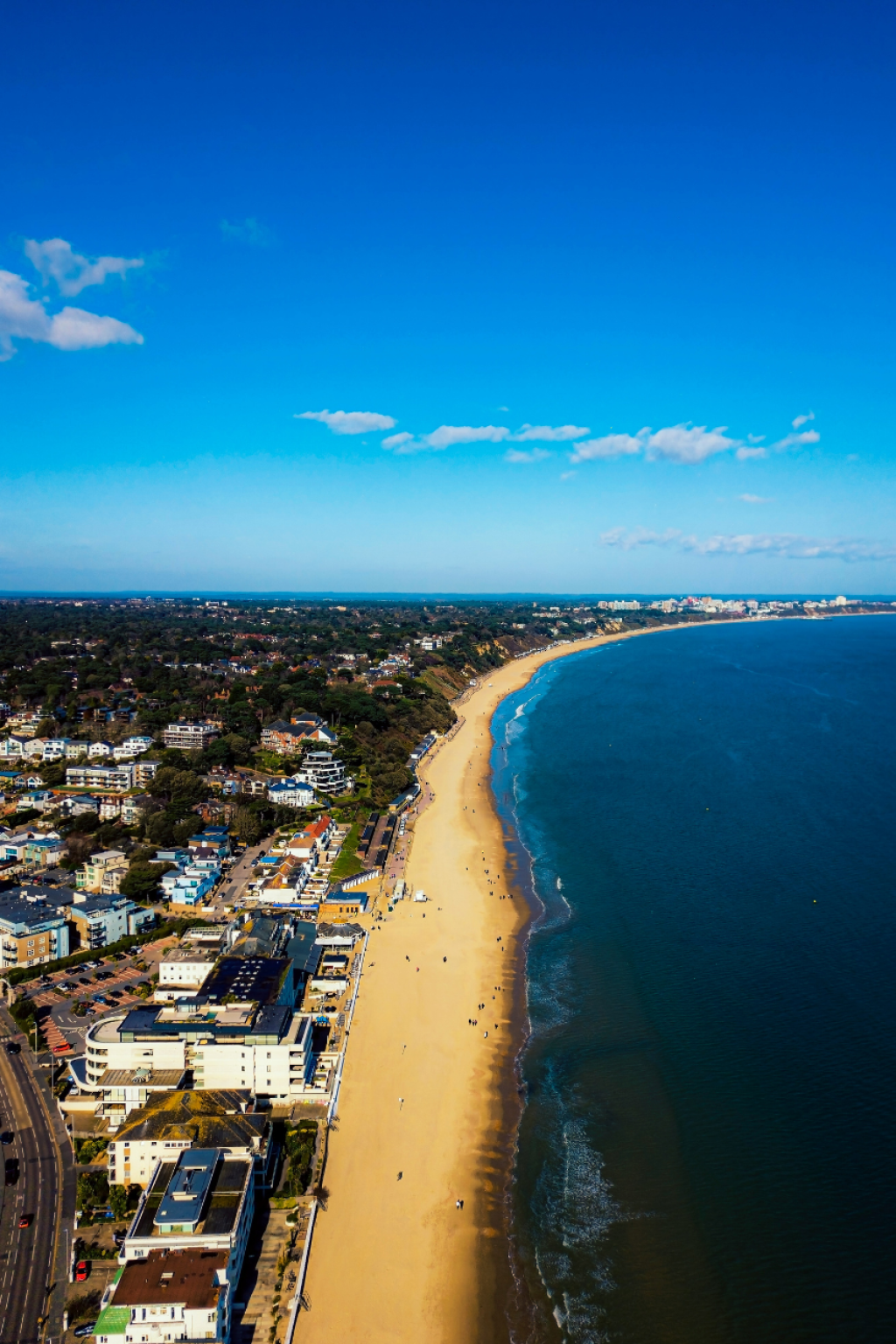
Access to outdoor space is a major attraction. Poole’s beaches, harbour and parks provide different ways to spend time outside, while its location makes exploring the wider Dorset coast part of the appeal. The town also has an established arts venue in Lighthouse and distinct shopping and residential neighbourhoods.
The compromises deserve equal attention.
Living in Poole does not automatically mean being within walking distance of a sandy beach. The harbour frontage, town centre and open coast are different places, and the journey between them matters.
Popular waterfront locations can also bring more visitors, parking pressure and activity around your home. Elsewhere, a quieter street may mean a longer journey to the station or fewer convenient evening buses.
We’d compare homes by their total cost, practical location and year-round surroundings, rather than concentrating on the view.
Official statistics provide a useful starting point, but the figures below cover Bournemouth, Christchurch and Poole combined. They are not Poole-only averages.
The Office for National Statistics reported an average house price of £310,000 in July 2026, provisionally, and an average monthly private rent of £1,398 in August 2026 across the BCP council area.
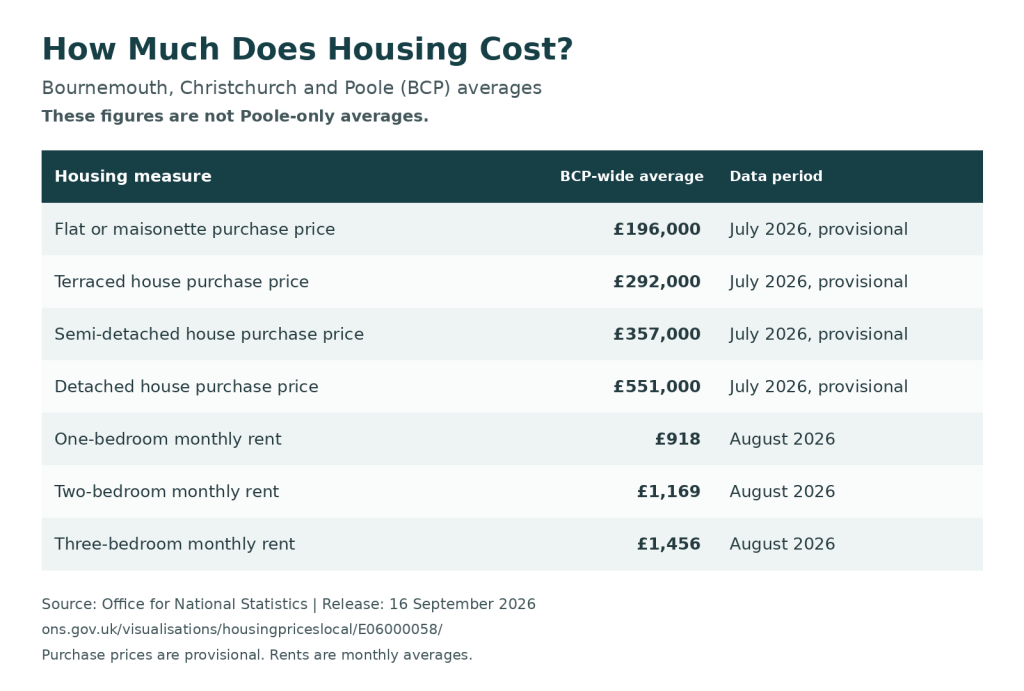
Use these figures as context, then compare properties in your shortlisted neighbourhoods. Purchase-price statistics differ from advertised asking prices, while rental averages cover existing tenancies as well as new lets.
Compare homes with similar space, condition, parking and outdoor areas. For flats, include service charges and any anticipated building works when assessing affordability.
Housing is only one part of the budget. A property that appears affordable can become less practical once travel, childcare and ongoing charges are included.
Council Tax: BCP Council lists a total Band D charge of £2,399.99 for 2026/27 in its unparished areas, including police and fire charges. That is approximately £200 a month when spread across 12 months, before any applicable discounts or reductions. Check the exact address and band rather than assuming this example applies to your home.
For other household expenses, obtain figures that reflect your circumstances:
Keep a separate allowance for moving costs and initial purchases. Curtains, appliances, furniture and small repairs can add up quickly.
These are starting points for exploration. Neighbourhood names cover varied streets, so visit the specific address and walk the surrounding area.
Town centre and Old Town
Consider these if access to central shops, the Quay and transport is important. Investigate parking, nearby businesses and evening activity.
Baiter and Whitecliff
Worth exploring if harbour-side outdoor space is high on your list. Check how easily you can reach your everyday shops and commuting connections.
Parkstone, Ashley Cross and Penn Hill
Explore the individual local centres and surrounding residential streets. Ashley Cross is part of Lower Parkstone, with shops and places to eat around the green and Parkstone station nearby. Upper Parkstone has a different setting around Ashley Road.
Canford Cliffs and Sandbanks
These are options for those prioritising proximity to the open coast. Compare the cost of suitable properties with the practicalities of shopping, commuting and visitor activity.
Branksome
Consider the location in relation to both Poole and Bournemouth. Check the walk to the station, bus stops and local shops rather than relying on the area name.
Broadstone, Oakdale and Canford Heath
Include these in a search focused on residential surroundings and everyday amenities. Assess school runs, work journeys and the distance to your preferred leisure activities.
Hamworthy
Explore its residential streets, station access and harbour-side surroundings. Test journeys to the centre and beyond at the times you would normally travel.
If you are moving with children, investigate school arrangements before committing to a property.
Start with BCP Council’s school admissions information, then read the relevant school’s admissions policy. The process differs between starting school, moving to the next stage and requesting a place during the school year.
Living near a school does not guarantee a place. BCP Council specifically advises families moving into the area that the nearest school may already be full.
Alongside school research, check nursery availability, breakfast clubs, after-school care and holiday provision. Build a realistic timetable that includes drop-off, work and collection.
Outdoor space is another consideration. Our Poole Park visitor guide introduces its facilities and activities, but also investigate the smaller parks and play areas you would use close to home.
Poole has four railway stations: Poole, Parkstone, Branksome and Hamworthy. Check services from the station you would actually use, including its facilities and the journey to reach it. For longer trips, use South Western Railway’s journey planner to compare connections towards Bournemouth, Southampton, London Waterloo and westwards.
Morebus provides local connections. Its m1 and m2 routes link Poole with Bournemouth via Upper Parkstone, Branksome and Westbourne, making this corridor worth investigating if you hope to rely on buses. Check the current timetables and route maps for your particular journey.
Living without a car may work well when home, work and essential services align. Test the complete journey, including walking, waiting and the return trip after an evening out.
For drivers, visit during your expected commuting hours. A weekend viewing will not tell you how the school run or journey to work feels.
The town centre offers the Dolphin shopping centre, High Street and access towards the Old Town and Quay. The Dolphin’s website lists its current shops and facilities.
Local shopping areas may become more important than the centre once you settle in. Work out where you would buy groceries, collect prescriptions, post parcels and deal with everyday errands.
For ideas beyond the essentials, explore our independent shops in Poole guide and Poole Market guide.
Meeting people often starts with a repeat visit: a class, volunteering session, sports club or creative group. Browse our community clubs and associations directory, then contact organisers about current sessions and membership.
Before choosing a home, make time for these checks:
The flood-risk service is a useful starting point for investigating risks from different sources; it should not replace professional advice about a particular home.
If you are still deciding between neighbourhoods, renting first can give you time to experience normal working weeks and different seasons.
Poole offers several versions of coastal living. The right home is one that lets you enjoy the surroundings while making the ordinary parts of life work comfortably.
If you enjoyed this, you may also enjoy:


 Spanish
 Chinese (simplified)
 Dutch
Dutch French
 German
 Italian
 Norwegian
 Polish
 Romanian
 Russian